Generative AI has evolved from an emerging technology into a strategic business capability. In 2026, organisations across industries are using AI to automate repetitive tasks, improve customer experiences, accelerate software development, analyse information, and support better decision-making. As AI models become more capable and easier to integrate with enterprise systems, businesses are moving beyond basic experimentation toward practical, measurable applications.
Understanding the key Generative AI trends for 2026 can help organisations identify where AI can deliver genuine business value.
1. AI Agents Are Transforming Business Automation
One of the most significant developments in 2026 is the rapid growth of AI agents. Traditional AI applications generally respond to individual prompts, while AI agents can understand objectives, make decisions, use tools, and perform multiple steps to complete a task. Businesses are exploring AI agents for customer support, sales, IT service management, research, workflow management, and administrative processes.
2. Custom AI Solutions Are Becoming More Important
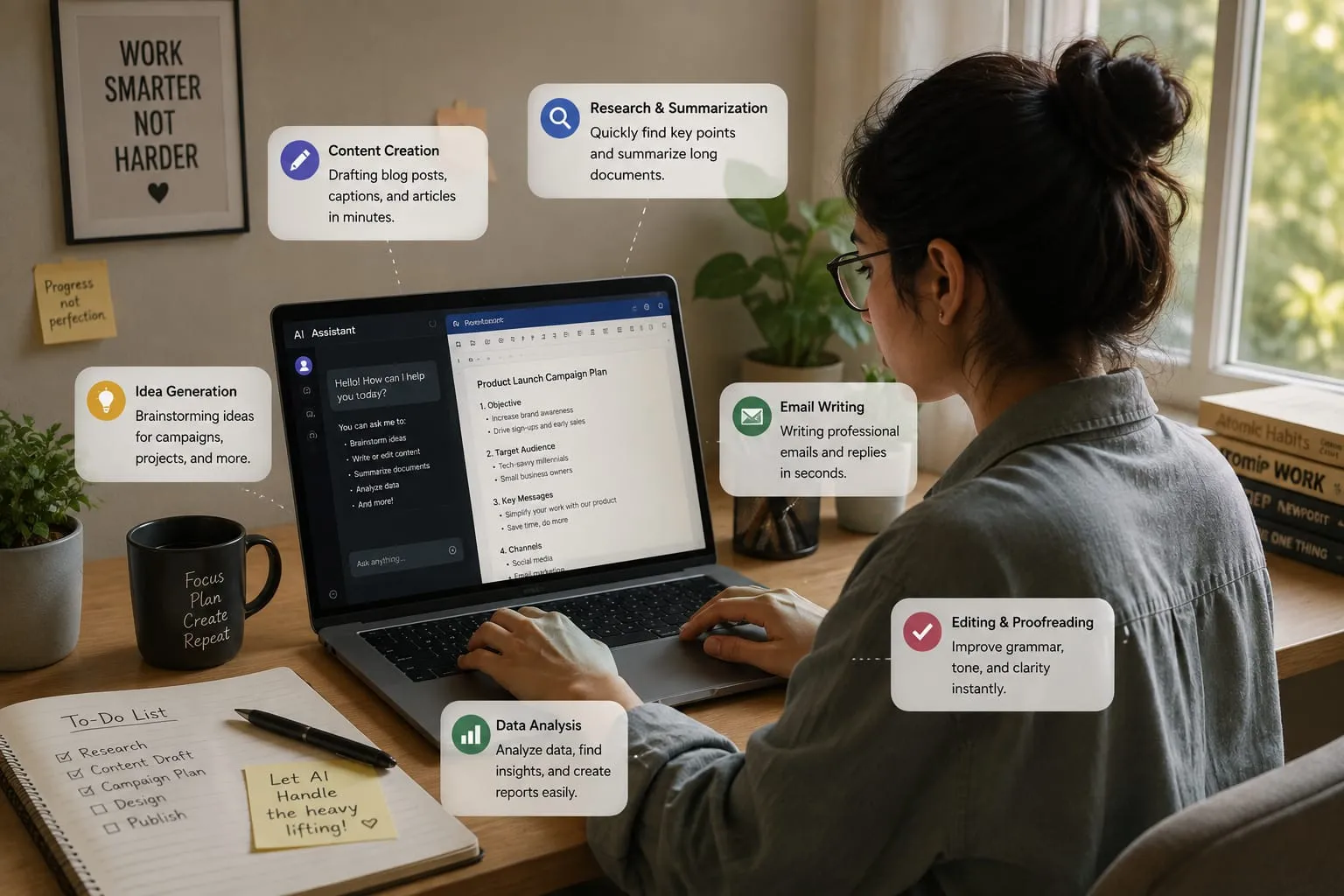
Organisations are increasingly moving away from generic AI applications and looking for solutions designed around their specific business requirements. Custom AI solutions can connect generative AI models with company data, applications, workflows, and industry-specific knowledge. Businesses can use customised AI applications for document processing, internal knowledge assistants, personalised recommendations, content generation, customer support, and intelligent workflow automation. This approach allows companies to focus on specific business challenges instead of adopting AI simply because it is a current technology trend.
3. RAG Is Improving Enterprise AI Accuracy
Retrieval-Augmented Generation, commonly known as RAG, is another important trend in enterprise AI adoption. RAG allows an AI application to retrieve relevant information from approved data sources before generating an answer.
This is particularly valuable for organisations that need Generative AI development services to work with their own documents, policies, product information, databases, or knowledge repositories. For example, a customer-service AI assistant can retrieve information from an organisation’s approved knowledge base before responding to a customer. This can help improve relevance, reduce unsupported responses, and make enterprise AI more useful for practical applications.
4. Generative AI Is Accelerating Software Development
AI-assisted software development is becoming an important productivity driver in 2026. Developers can use AI tools to generate code, explain existing code, identify potential issues, create documentation, support testing, and accelerate repetitive development tasks. The objective is not necessarily to replace developers but to help them spend less time on repetitive coding activities and more time on architecture, problem-solving, security, and innovation.
5. Multimodal AI Is Expanding Business Applications
Generative AI is no longer limited to text. Multimodal AI can work with combinations of text, images, audio, video, and other data formats. This opens new opportunities for businesses. Retailers can use AI to analyse product images and descriptions; manufacturers can combine visual information with operational data, and marketing teams can create and adapt content across multiple formats. As multimodal capabilities continue to improve, businesses can develop more interactive and intelligent applications for customers and employees.
6. AI Governance and Security Are Becoming Essential
As companies deploy AI at scale, governance and security are becoming increasingly important. Organisations need to consider data privacy, access controls, model security, compliance, monitoring, and responsible AI practices. “AI should be implemented with appropriate safeguards and clear policies around data usage.” Businesses also need processes for evaluating AI outputs and monitoring systems after deployment. Effective AI implementation services can help organisations address these technical and operational requirements while building AI solutions that are scalable and secure.
7. AI Consulting Is Guiding Smarter Adoption
Many businesses recognise the potential of generative AI but are unsure about how to get started. As demand grows for practical AI solutions, organisations increasingly need strategic guidance to identify relevant use cases, assess suitable technologies, estimate potential benefits, and develop clear implementation roadmaps. For businesses exploring AI consulting services in Tricity, taking a structured approach can help ensure that AI investments support measurable business objectives rather than becoming isolated experiments. Meanwhile, companies considering generative AI services can benefit from technology partners who combine AI expertise with a strong understanding of business processes, integration requirements, and long-term scalability.
BPC Case Study: Generative AI in Customer Service and Software Development
A practical example comes from BPC, a global payments solutions provider. The company adopted generative AI on AWS to improve customer service and developer productivity.
BPC developed an AI-powered chatbot using Amazon Bedrock and Retrieval-Augmented Generation to help customer service teams deliver faster, more accurate responses. The company also used Amazon Q Developer to support developers with coding and security-related tasks. According to the AWS case study, BPC achieved a 66% reduction in chatbot costs, generated more than 4,000 lines of code, and achieved a 46% code-acceptance rate during its developer pilot. The example demonstrates how generative AI can deliver practical benefits across customer service, software development, operational efficiency, and employee productivity.
https://aws.amazon.com/solutions/case-studies/bpc/?utm
What These Trends Mean for Businesses
The major generative AI trends in 2026 point toward a broader transformation in how organisations work. AI agents are making automation more intelligent; RAG is helping enterprises use their own knowledge more effectively; multimodal AI is expanding application possibilities, and AI-assisted development is improving software productivity.
However, successful AI adoption requires more than simply choosing an AI model. Businesses need the right strategy, data infrastructure, security framework, integration approach, and implementation plan.
Conclusion
Generative AI is becoming a practical foundation for business innovation in 2026. Organisations that strategically adopt AI can improve productivity, enhance customer experiences, streamline operations, and create new digital capabilities. GrayCell Technologies helps businesses explore these opportunities through generative AI development services, custom AI solutions, AI implementation services, and AI consulting services in the Tricity. By focusing on practical use cases and business outcomes, organisations can move from AI experimentation toward sustainable, scalable AI adoption.
FAQs
- What are the top Generative AI trends in 2026?
The top generative AI trends in 2026 include AI agents, custom AI solutions, Retrieval-Augmented Generation (RAG), AI-assisted software development, multimodal AI, AI governance and security, and strategic AI consulting. These trends are helping businesses automate workflows, build solutions tailored to their needs, improve AI accuracy, accelerate software development, expand AI applications across different formats, strengthen security, and adopt AI more strategically
- How can generative AI benefit businesses in 2026?
Generative AI can automate repetitive tasks, improve customer experiences, accelerate content creation, support data analysis, and enhance productivity. Businesses can use custom AI solutions to address specific operational and industry requirements.
- What are Generative AI development services?
Generative AI development services involve designing, developing, and deploying AI applications such as AI assistants, content-generation tools, intelligent agents, and enterprise AI platforms tailored to business needs.
- Why are AI agents becoming an important business trend?
AI agents can perform multi-step tasks, make decisions based on defined objectives, and interact with business systems with limited human intervention. This makes them valuable for workflow automation, customer support, research, and business operations.
- How do businesses successfully implement generative AI?
Businesses can begin by clearly defining use cases, assessing their data and technology infrastructure, establishing AI governance, and gradually deploying solutions. Professional AI implementation services can help organisations integrate AI into existing workflows and systems.
- When should a business consider AI consulting services?
Businesses can consider AI consulting services in Tricity when they need help identifying suitable AI use cases, selecting technologies, planning implementation, managing risks, or developing a long-term AI strategy.
- Is generative AI suitable for small and medium-sized businesses?
Yes. SMEs can use generative AI for customer service, marketing, document processing, sales support, internal knowledge management, and workflow automation. The right solution depends on business objectives, available data, budget, and scalability requirements.
- How can businesses prepare for generative AI adoption in 2027?
Businesses can prepare for generative AI adoption in 2027 by identifying high-value use cases, strengthening their data infrastructure, and establishing responsible AI policies. They should also invest in employee upskilling and choose scalable technologies that can adapt as their AI needs evolve. Starting with focused pilot projects can help businesses evaluate results, manage risks, and create a practical roadmap for wider AI adoption.