
At some stage, every successful business is faced with the challenge of supporting more users, data, and more complicated operations than what was initially intended for their software. Many organizations start with a solution that is just right for the immediate need, and then fail when business needs expand. Eventually, slow operations, high maintenance bills, and restricted flexibility can have an impact on both customer experience and operational efficiency.
That’s why Scalable software development is on a priority list for all organizations. Instead of creating systems once every couple of years to meet future expansion needs, organizations can use software that will be able to help the organization expand without hindering performance and security. For startups that strive for growth and expansion, as well as organizations that wish to enter new markets, scalability software can become an essential tool for achieving sustainable success.
The Importance of Scalability in the Modern World
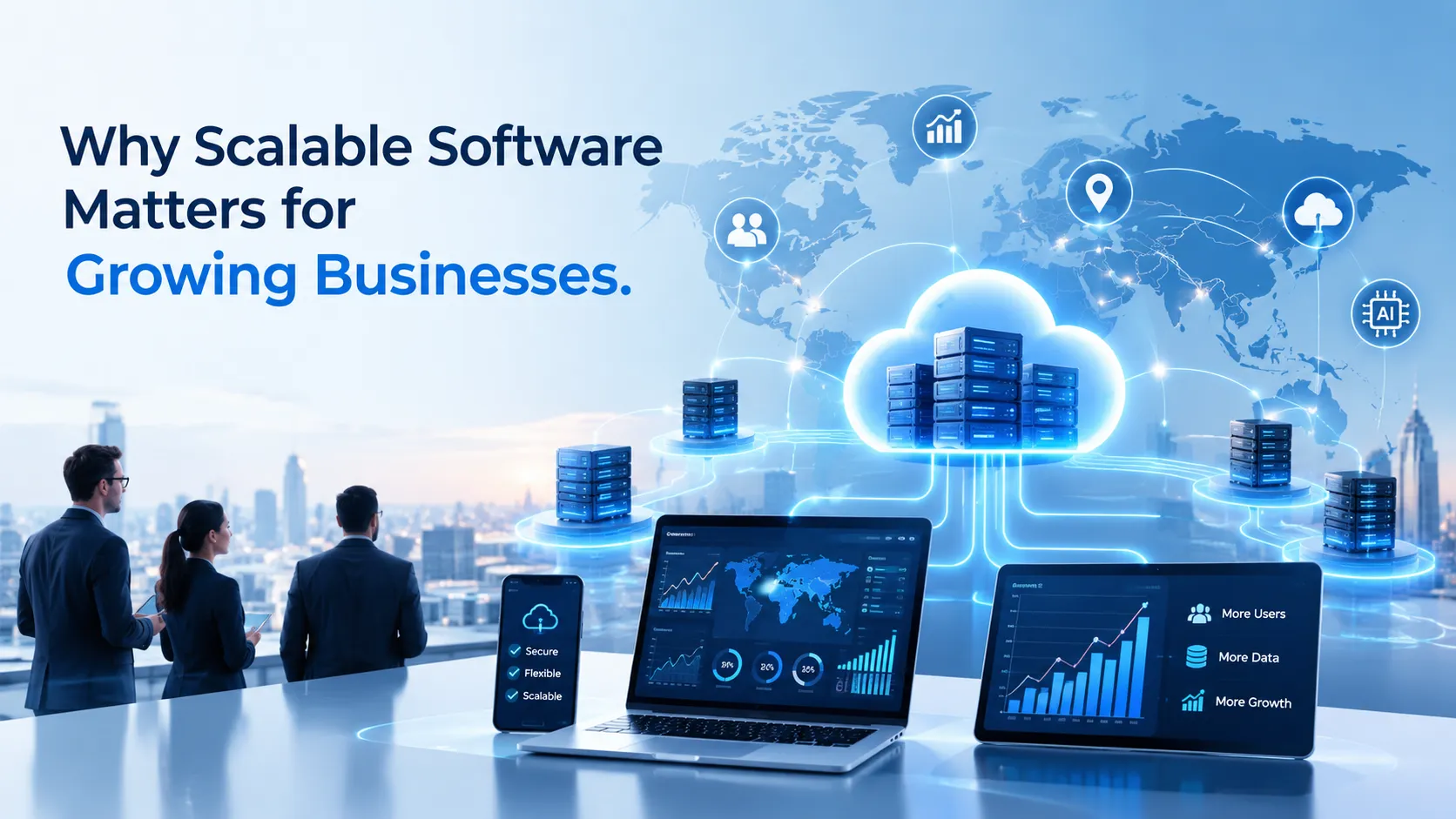
In many industries, digital transformation processes have taken place, and users require flawless performance of applications, no matter how much traffic or in what location. Organizations themselves expand geographically, using cloud-based services and introducing AI into day-to-day operations. Failure to meet these challenges in the software will soon turn into a limitation.
Businesses that focus on Scalable software development will be better equipped to meet evolving customer requirements, roll out new solutions, and handle growing loads. They can work on innovation rather than reacting to growth challenges and maintain assured user experiences.
Define Business Goals Before Writing Code
There are no technology solutions that can create scalable software. It starts by knowing the business goals and plans. It is crucial for development teams to determine key user growth considerations, transaction volume, compliance, and integration requirements prior to technology selection.
There are some key planning questions to consider:
- What will be the number of users for the application in the next three to five years?
- Will the business go overseas into other countries or regions?
- Which third-party platforms/APis are required to be integrated?
- What are customer expectations going to look like as the company expands?
By answering these questions early, development teams can build systems that will continue to meet business needs without the need for costly redesigns later in the development process.
Develop Flexible Architecture from the start
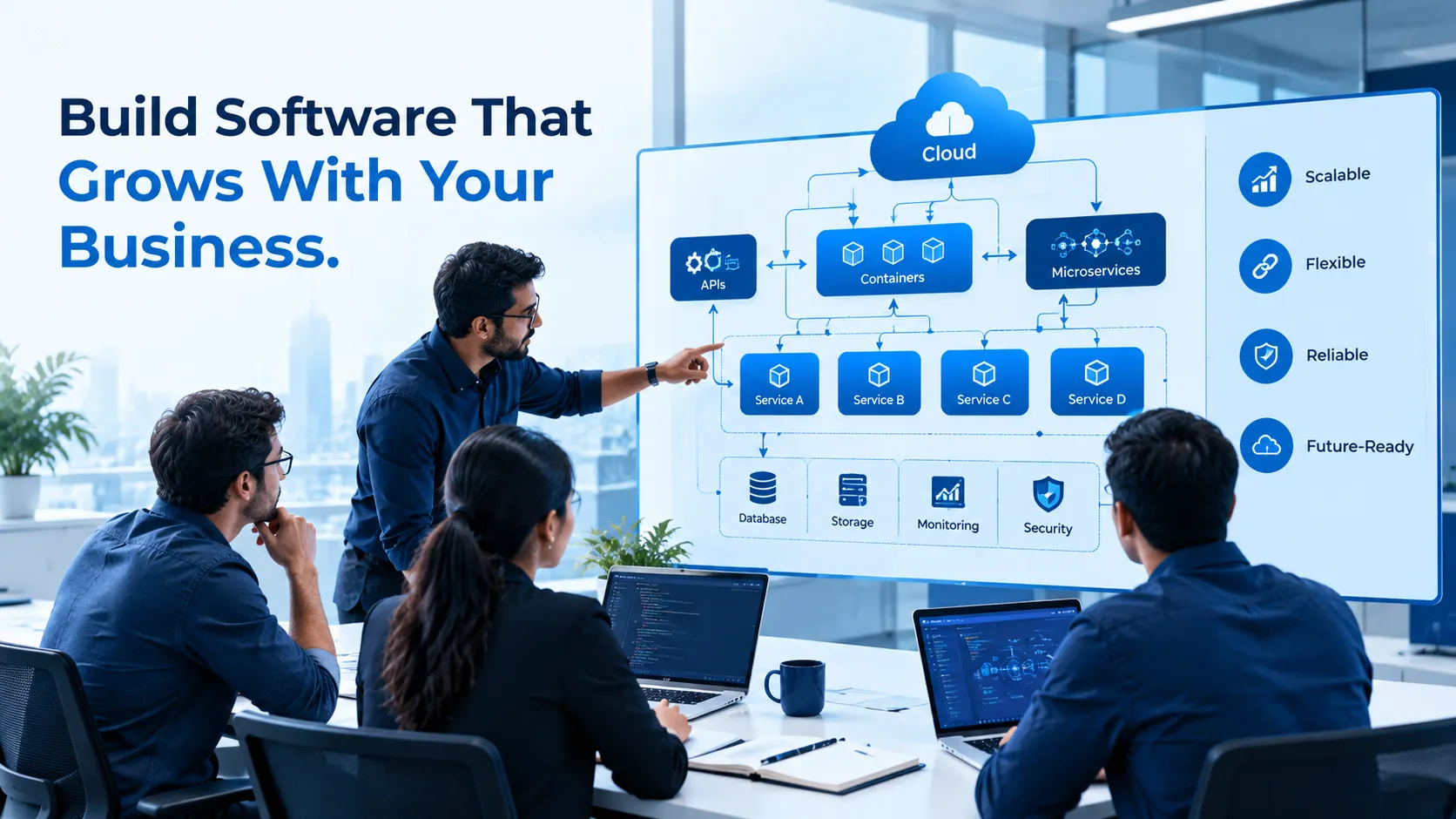
Scalability involves planning for an application, rather than simply scaling up with more hardware. Modularity allows each component to be developed independently, hence allowing for easy updates with less operational risk.
Current Software Product Development is all about the development of services that are independent and communicate effectively. By so doing, the organization will be in a position to make changes, enhance performance, and fix issues within the application without having to affect the entire application.
Cloud infrastructure, containerization, and API communication provide for more flexibility in support of business growth. This flexible architecture also provides a strong foundation for Custom business application development, enabling organizations to add new features and integrations without disrupting existing operations.
Select Growth-Contributing Technologies
The right technology stack is a direct determinant of scalability. Technologies pop up and go quickly, but businesses should focus on ones that have a strong community, are proven to be stable, and are compatible in the long term.
Key considerations include:
- Automatically scalable cloud infrastructure.
- Optimized databases for anticipated growth of data.
- Ensure that APIs are secure and ready for smooth integration.
- Early warning monitoring systems.
- Automated tests for application reliability.
The choice of technology must always have the future in mind and not just solve today’s problems. When businesses think ahead, they’re likely to see reduced maintenance expenses and more flexibility in their operations as they expand.
Ensure Optimal Performance and Security at Scale
Growth should not at any time sacrifice performance or security. With an increasing number of users, applications must be able to deliver quick responses as well as protect business and consumer data. Reliable performance is ensured by constant monitoring, automated testing, as well as caching and load balancing at the peak of usage.
Companies can also gain an advantage from working with Product Development Consulting groups and identifying possible problems and eliminating them before they become issues. Regardless of changes in business needs, regular performance reviews, security evaluations, or infrastructure optimization, software remains reliable.
Develop design for Future Customisation and Integration
No company is ever a business forever. With growth, new services, new payment gateways, new customer relationship management systems, and even analytics tools might become a necessity. For this reason, software should always be built with flexibility and easy integration in mind.
The process of Custom business application development allows businesses to build applications that are tailor-made to their business needs and that will easily adapt to future changes and upgrades. This kind of standardization will help businesses avoid using different systems that will not be able to work together and help them exploit market opportunities.
Final Thoughts
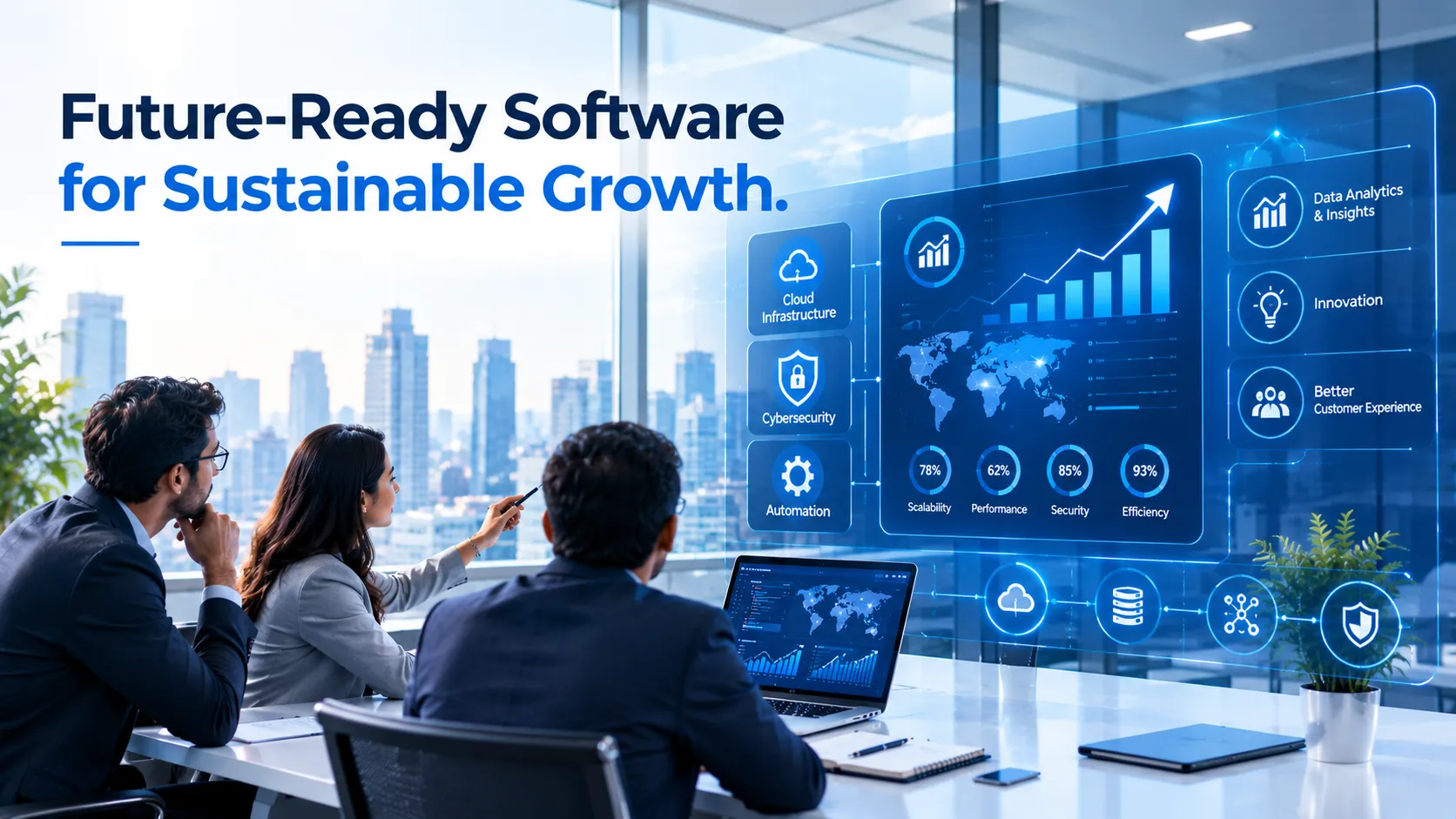
Growing software needs careful planning, up-to-date architecture, and constant development. Instead of only planning for the users’ needs, companies should anticipate their users’ future needs, future growth, and the evolving technology landscape. By making investments in Scalable software development today, you are not only reducing costs in the long run but also providing a better experience for your customers and ensuring sustainable business growth.
GrayCell Technologies will provide businesses with a trusted technology partner for end-to-end digital solutions. Whether you’re looking for Software Product Development, Custom Business Application Development, or Professional Product Development Consulting, GrayCell Technologies can help you create secure, scalable, and future-proof software solutions that meet your company’s changing requirements.
FAQs
- What is scalable software development?
Scalable software development is the process of designing and building software that can efficiently handle increasing users, workloads, and business requirements without major changes to its core architecture. - Why is scalability important for businesses?
Scalability reduces future redevelopment costs, improves performance, supports business expansion, and provides a better customer experience as demand grows. - How does cloud technology support scalable applications?
Cloud platforms provide flexible computing resources that can automatically increase or decrease based on business demand, improving performance and cost efficiency. - When should a company start planning for scalability?
Scalability should be considered during the initial planning and architecture phase rather than after the software begins experiencing growth-related challenges. - Can custom software be scalable?
Yes. Well-designed Custom Business Application Development projects can use scalable architectures that support future integrations, higher traffic, and evolving business requirements.