
In today’s business environment, mobile applications are now playing a pivotal part in any business plan. However, with proper implementation, a mobile app can have a profound impact on businesses looking to improve customer engagement, optimize operations, or create new revenue streams and business opportunities. Once implemented, a good mobile app can be a big deal for any company, regardless of its size, and can help boost customer engagement, streamline business processes or create new revenue or business opportunities.
Building an app is not just a matter of selecting a couple of designs and dropping it off in one of the app stores. The first thing that businesses need to be aware of and consider before investing in Custom Mobile App Development is their goals, technical needs and future plans. By planning properly, risks can be mitigated and the product delivered at the optimum cost and value to the user.
Define Your Business Goals Before Development
All successful cell apps have a defined intent behind them. Once you know what your app is supposed to solve and how it will integrate into the overall goals of the company and its goal, then you can proceed. The service will not be designed with its consumers in mind as it is done in the case of the web services, but it will rather be created to solve internal needs in the case of companies that do businesses online.
In the optimization of your CCS, there is one thing that you should ensure, and that is having a company to help you out in this process. This can be done by getting yourself a company to work with. Formulating goals is also more easily measurable to assess the app’s performance after the formulation.
Understand your Intended Audience

It is important to know your users, when developing a successful mobile application. To make sure that businesses aren’t developing an app that no one wants, they need to research customers’ preferences, usage, browsing habits and pain points before locking the final features.
In Mobile UI/UX Design, it is also part of the user centered approach, which makes it easy to use, user friendly and interesting to the users. Fast page load and user-friendly interfaces provide seamless and intuitive navigation, improving user satisfaction and retention.
Plan Essential Features Without Overcomplicating the App
Adding functionality is easy, but can come with a cost and slow down product releases. Maintain the most important functions (the main thing), and incrementally add on based on feedback from users.
The following elements can be incorporated into them:
- Users need to have a registration and login procedure in place.
- Make payment options (where applicable)
- Push notifications
- Possesses search and search capabilities.
- Customer support integration
A focused feature set enables developers to develop a stable product and provides a foundation for the company to roll out more capabilities when they go to market.
Be Sure to Focus on Integrating and Scaling
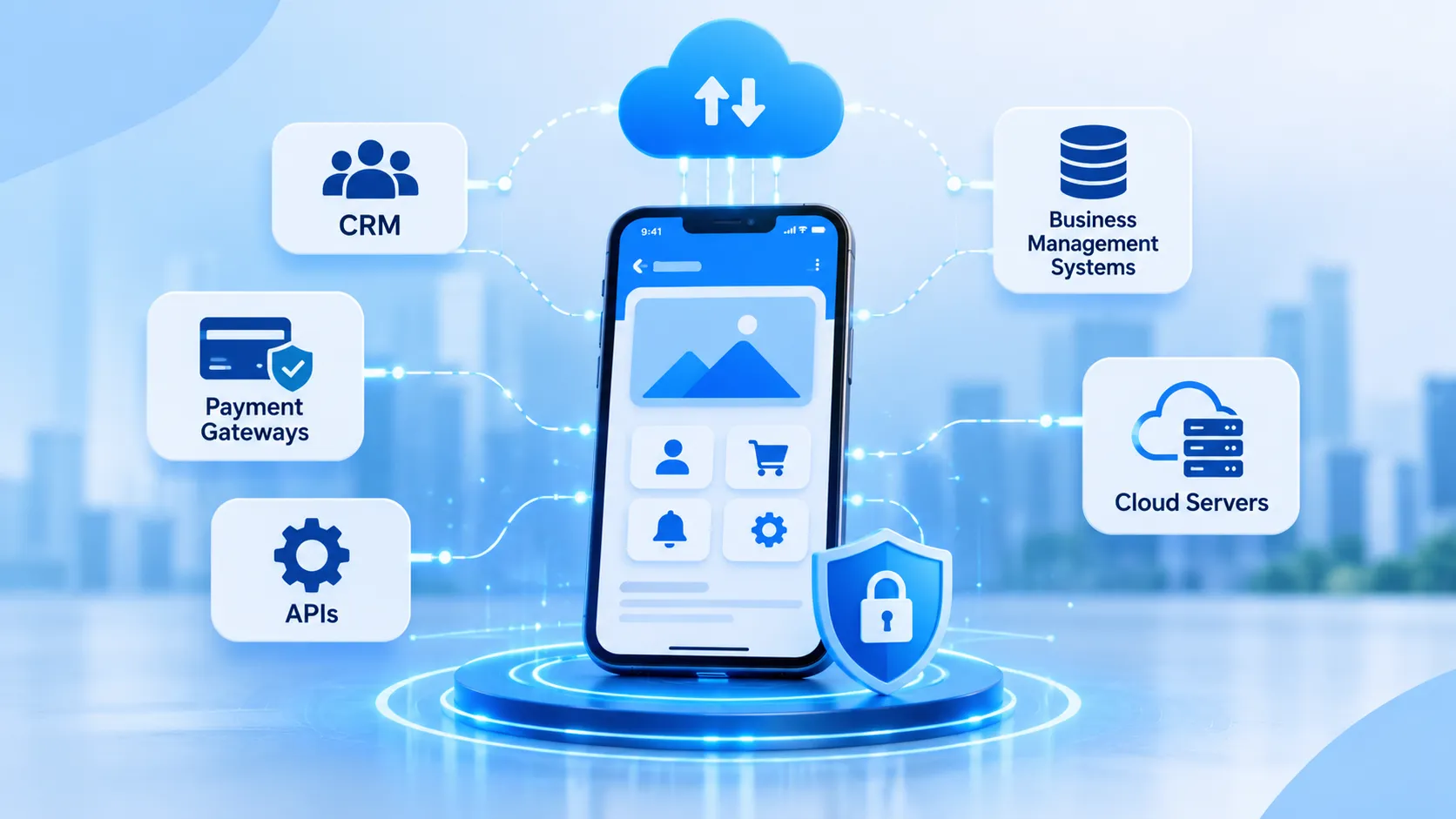
These days mobile apps are not stand alone. Normally, they get smoothly integrated into CRM applications, payment gateway applications, stock systems, cloud storage, or any other third-party application. And that is what we think of in case we talk about API Integration for Mobile Application.
Also archived, the companies should consider not only the needs at hand but further down the road. The app should evolve according to the growth in the customer’s demands but stay unharmed by the changes and not require complete rebuilding. In the long run, planning for scalability can help save time and resources. API Integration for Mobile Applications Done Properly is Also Beneficial to Data Synchronization and Automation as the Organization Expands.
Pay Attention to Quality, Security and Performance
App users demand apps that are fast, reliable, and secure. App users demand apps that have fast speed, reliability, and security. Even the smallest technical issue can cause downtime, which will negatively affect the app ratings and service retention. Even the smallest technical issue can cause negative app ratings and low service retention. The process of testing should be incorporated into the business development cycle, which includes: Performance testing, Security testing, and Compatibility testing.
A secure app protects the information of the user through encryption, user authentication, and compliance within the industry. Reliability of the app can be ensured by regular maintenance and updates.
QA at an early stage will help in improving the customer experience and save money on later repairs.
Consider Long-Term Product Development
It’s just the start of the launch of the application. Organizations must be able to continue improving on their product from time to time depending on the feedback from the users, analysis of their product, and the evolving needs in the market. Adhering to Software Product Development standards helps businesses enhance their software offerings and stay relevant to the evolving demands of their customers.
Improvements in the past such as the addition of new features, performance upgrades, operating system upgrades, and security upgrades can lead to continuous improvement. Briefly speaking, the value of a product for a business will increase if it is considered a dynamic digital asset.
Select the Right Development Partner

A technology partner with experience could increase the success rate of the project. Apart from the technical skill, the process of communication, project management approach, industry knowledge and after launch support are some things to consider by the professional. When selecting a Mobile App Development Services company, it is essential that businesses assess various companies according to their technical skills, industry experience, communication procedures, and post-launch services.
A trusted development partner is familiar with your business needs and can provide you with strong Custom Mobile App Development solutions tailored to your business needs. They also have expertise and experience in Mobile App Development Services which can help businesses navigate the technology and decision making process, from initial concept to application launch.
In a similar manner, professional teams specializing in Mobile UI/UX Design create app designs that include impressive graphics and a seamless experience, helping to boost user engagement and satisfaction. They additionally carry out effective API Integration for Mobile Applications, guaranteeing smooth conversation amongst totally different business systems. Finally, structured approach has contributed to the success of Software Product Development that helps in sustaining business growth through continuous innovation.
Final Thoughts
Creating a mobile application is a complicated task that requires careful planning, decision making and technical skills. The Custom Mobile App Development solutions we offer to businesses at Graycell Technologies allow them to build more secure, scalable and accessible applications that are tailor-fit for their needs. Whether you need assistance with the initial design or support with deployment and maintenance, we have the expertise and capabilities to transform your ideas into successful mobile applications.
FAQs
- Why is planning important before developing a mobile app?
The process of planning helps determine the business goals, prioritizes the features, estimates the budget, and reduces the risk of developing. - How do Mobile App Development Services benefit businesses?
Professional Mobile App Development Services provide technical expertise, strategic guidance, quality assurance, and ongoing support to ensure successful application delivery. - What is API Integration for Mobile Applications?
Mobile Applications API Integration allows apps to communicate with external systems including payment gateways, CRM, cloud platforms and third party applications. - Why is Mobile UI/UX Design important?
Mobile User Interface/User Experience Design helps in improving usability, increasing customer satisfaction, increasing engagement, and motivating users to use the application further. - How does Software Product Development support long-term app success?
Software Product Development focuses on continuous improvements, feature enhancements, maintenance, and scalability, helping applications remain competitive as business needs evolve.